Trainings and Events
- Home
- / Events
Oracle Academy Series-02 | Webinars and In-Person Training workshops 2026
2nd Webinar of Oracle Academy Series-02
Date:02 September, 2026
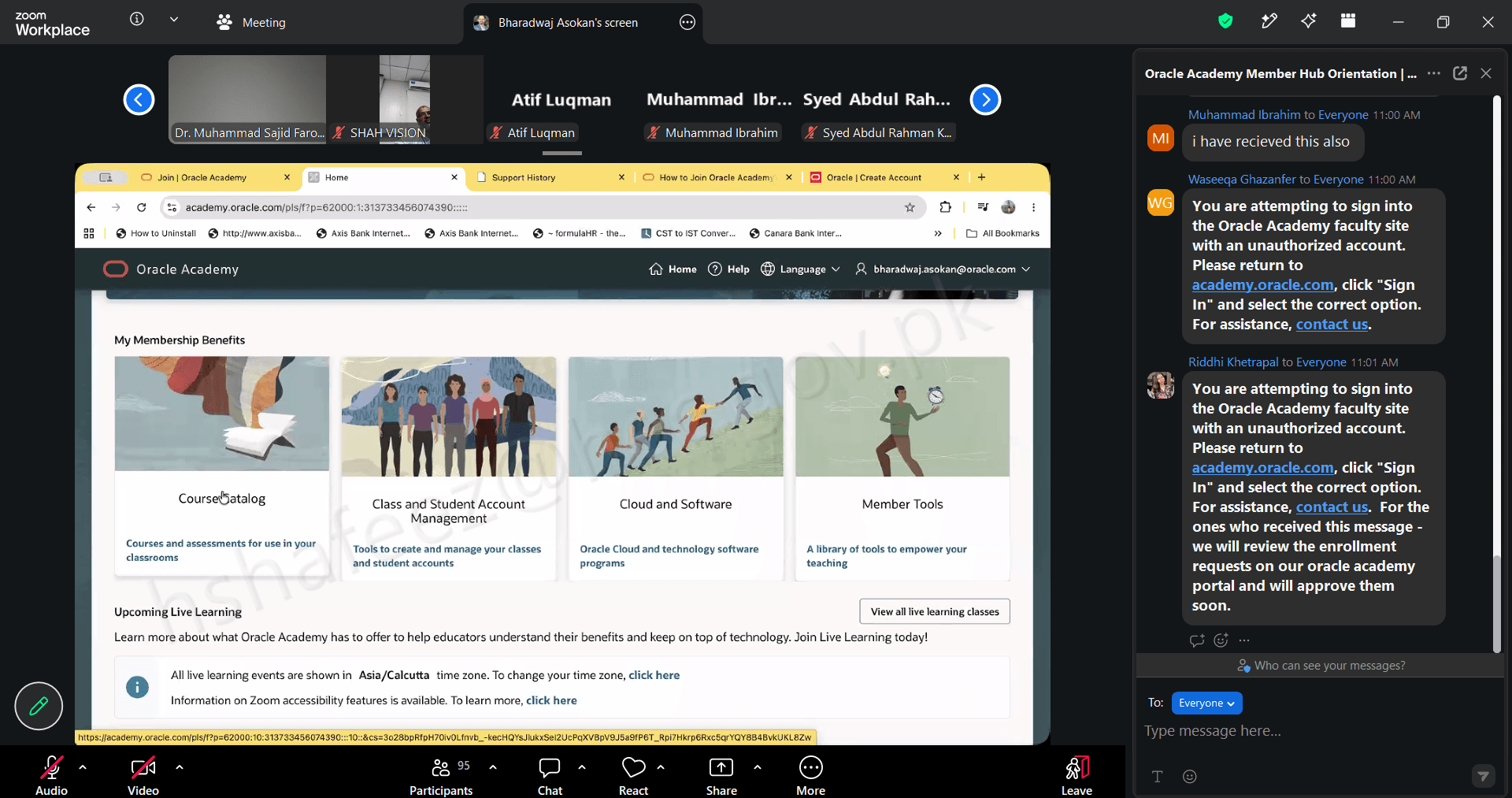
The National Computing Education Accreditation Council (NCEAC), Higher Education Commission of Pakistan, in collaboration with Oracle Academy, successfully organized Webinar 2 of Series 02, titled “Oracle Academy Member Hub Orientation”, on Wednesday, September 2, 2026, from 10:30 AM to 12:00 PM (PKT), via Zoom. The webinar was organized under the Train the Teacher Workshop – Using Oracle Academy Resources initiative.
The session was delivered by Mr. Bhardwaj Ashokan, Lead Program Manager, Oracle Academy – South Asia, as the Resource Person, with assistance from Mr. Basit Shafique, LUMS, Lahore.
The webinar aimed to familiarize Computing/Computer Science faculty members with the Oracle Academy Member Hub and enable them to effectively access and utilize Oracle Academy resources for teaching and learning.
During the session, participants received practical guidance onaccessing Oracle Academy resources, enrolling students, managing learning activities, generating certificates, and tracking student progress. The session also highlighted the curriculum, software, professional development opportunities, and technology resources available to Oracle Academy members.
NCEAC appreciates the valuable support of Oracle Academy and LUMS, Lahore, in facilitating the session and acknowledges the active participation of faculty members from higher education institutions across Pakistan.
1st Webinar of Oracle Academy Series-02
Date:August 10, 2026
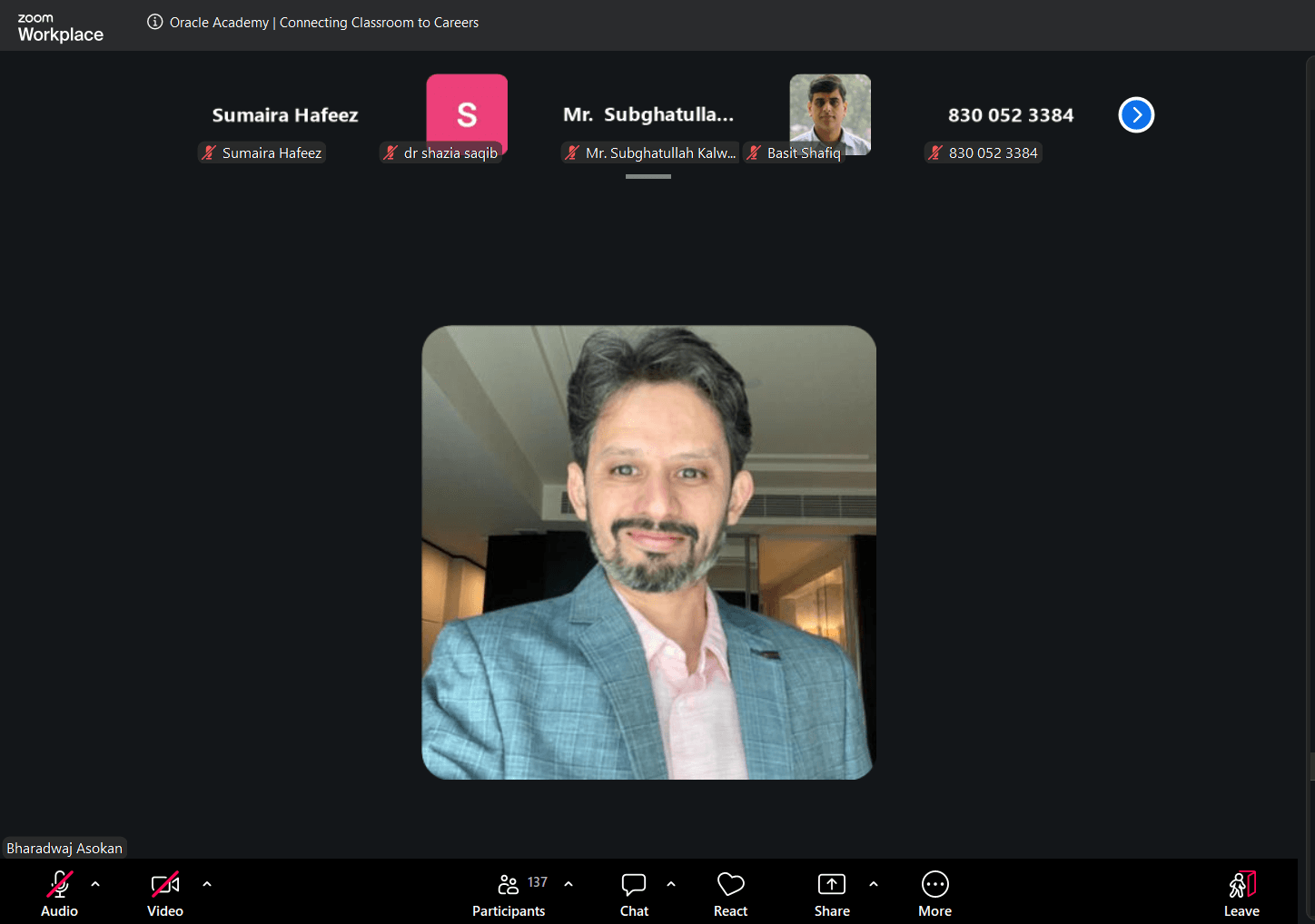
The National Computing Education Accreditation Council (NCEAC), HEC successfully conducted Webinar-1 of Oracle Academy Series-02 on August 10, 2026, with an impressive participation of 440 participants.
Webinar-1: Introduction to Oracle Academy Resources and Faculty Registration Guidance
The webinar featured Mr. Bhardwaj Ashokan, Lead Program Manager, Oracle Academy – South Asia, as the resource person, who provided valuable insights into Oracle Academy resources and guided faculty members on the registration process.
The session was coordinated by Dr. Basit Shafique, Professor, LUMS, Lahore, ensuring the smooth conduct of the webinar and effective engagement of participants.
The strong participation of 440 attendees reflects the growing interest of the computing education community in professional development and access to industry-aligned learning opportunities.
NCEAC appreciates the valuable collaboration and support of Oracle Academy in strengthening faculty capacity and promoting quality computing education in Pakistan.
Stay tuned for upcoming webinars under Oracle Academy Series-02!
NCEAC Train the Teachers Workshops on Discrete Mathematics – Series 01, Conducted in 2026
2nd Workshop of Train the Teachers Series-01
Date:17–20 August 2026
Venue:IQRA University,Islamabad Campus
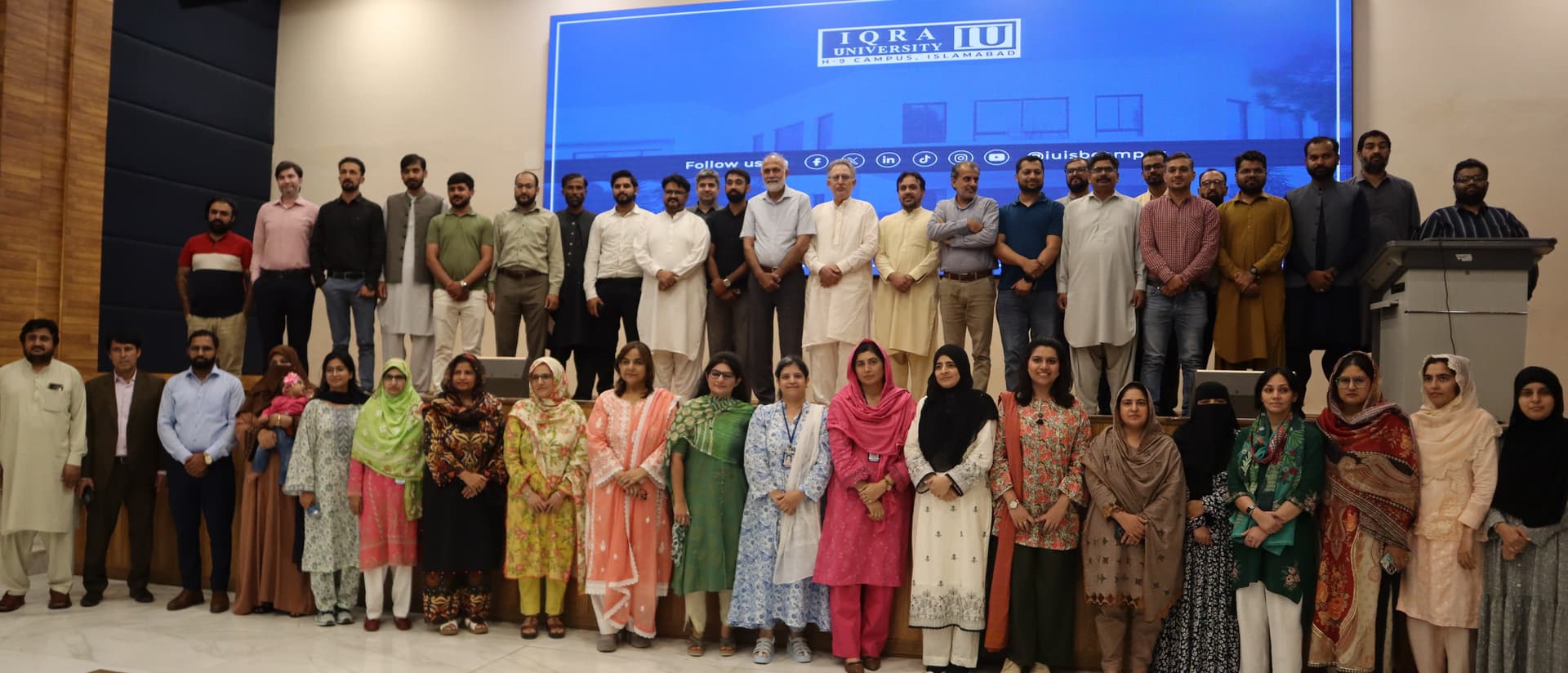
The National Computing Education Accreditation Council (NCEAC), HEC, successfully concluded the 2nd Workshop of Train the Teachers Series-01 on Discrete Mathematics from 17–20 August 2026 at Iqra University, Islamabad Campus.
The workshop brought together 87 registered participants, with 31 faculty members attending all four days. The sessions focused on strengthening pedagogical skills, conceptual understanding, problem-solving, and effective teaching approaches for Discrete Mathematics.
The workshop was facilitated by Dr. Imdad Ullah Khan (LUMS) and Dr. Malik Jahan Khan (LUMS).
The Islamabad workshop followed the successful 1st Workshop of Series-01, conducted by NCEAC from 17–20 July 2026 at IMSciences, Peshawar.
NCEAC appreciates the contributions of the trainers, participating faculty, and host institutions and remains committed to faculty capacity building and improving the quality of computing education in Pakistan.
1st Workshop of Train the Teachers Series-01
Date:17–20 July 2026
Venue:IMSciences, Peshawar
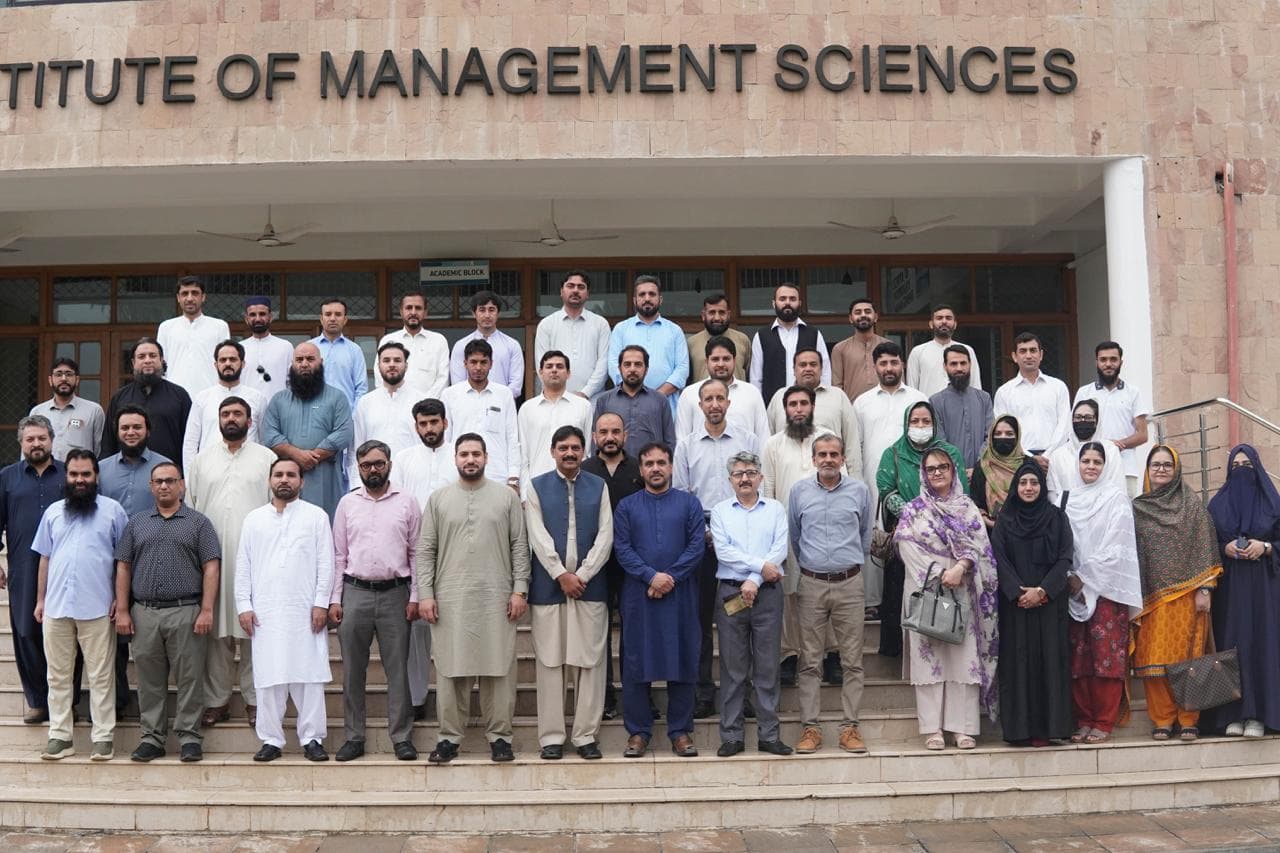
The National Computing Education Accreditation Council (NCEAC), Higher Education Commission (HEC), successfully organized the "First NCEAC Train the Teachers Workshop on Discrete Mathematics" from 17–20 July 2026 at the Institute of Management Sciences (IMSciences), Peshawar. The four-day workshop was designed to strengthen faculty capacity in teaching Discrete Mathematics through effective pedagogical approaches and the exchange of best practices.
The workshop witnessed enthusiastic participation from computing faculty members representing higher education institutions across Pakistan. Attendance continued to grow throughout the training, with 46 participants on Day 1, 50 on Day 2, 52 on Day 3, and 54 on Day 4, demonstrating the strong interest and commitment of academia towards continuous professional development.
Participants attended the workshop from universities located in Abbottabad, Bannu, Chitral, Haripur, Islamabad, Malakand, Mardan, Nowshera, Peshawar, Swabi, and Swat, providing a valuable platform for knowledge sharing, networking, and collaboration among computing educators from diverse institutions.
The workshop focused on enhancing participants' understanding of Discrete Mathematics through interactive sessions, practical teaching strategies, collaborative discussions, and problem-solving activities. It also provided an opportunity for faculty members to exchange experiences and explore innovative approaches to improve student learning outcomes and strengthen the quality of computing education.
The National Computing Education Accreditation Council (NCEAC) remains committed to promoting excellence in computing education by organizing faculty development initiatives that enhance teaching quality, encourage academic collaboration, and support the continuous professional growth of computing educators across Pakistan.
OBE-Based Trainings Conducted in 2026
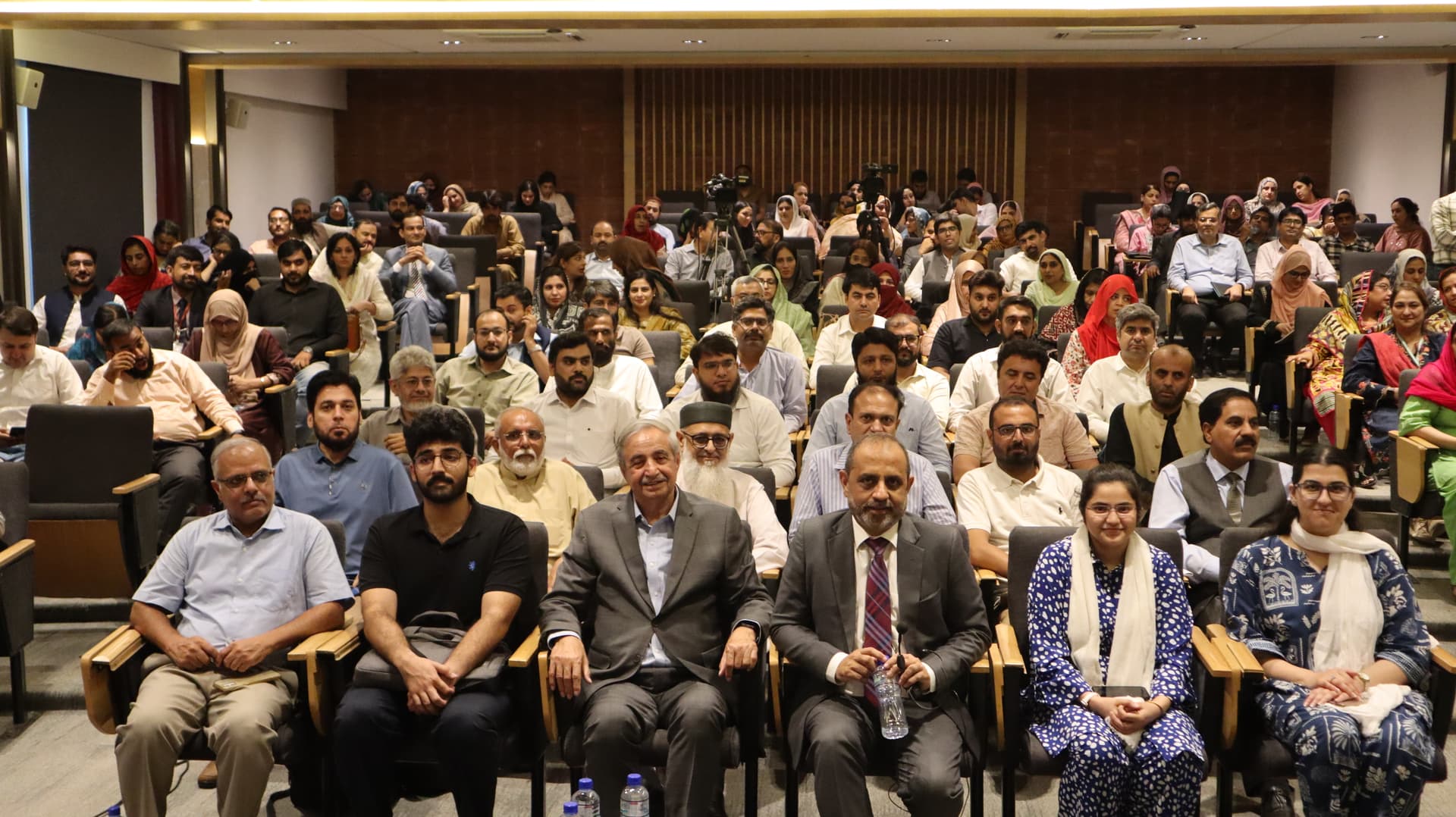
10 September 2026
Venue: Ibadat International University, Islamabad
The National Computing Education Accreditation Council (NCEAC), Higher Education Commission of Pakistan, successfully organized a training session on “Implementation of Outcome-Based Education (OBE) in Its True Essence” on Thursday, September 10, 2026, at Ibadat International University, Islamabad.
The rigorous four-hour session was conducted by Prof. Dr. Shoab A. Khan, Chancellor CASE and Member NCEAC, and was attended by more than 200 Computing/Computer Science faculty members from universities across Islamabad. The participants remained actively engaged throughout the session, reflecting the growing commitment of academia towards strengthening the quality of computing education in Pakistan.
The training focused on the practical implementation of Outcome-Based Education (OBE) and emphasized moving beyond documentation and compliance towards achieving OBE in its true essence. Live demonstrations were also conducted to provide participants with practical exposure to technology-enabled approaches for effective teaching, assessment, and academic quality enhancement.
A live demonstration of OBEledger.com, an AI-powered platform for OBE mapping and assessment, highlighted how technology can support systematic outcome mapping, assessment, and academic transparency. The session also introduced the National Open Distance Learning (ODL) Platform, highlighting its potential to expand access to education and strengthen digital learning delivery across Pakistan.
NCEAC extends its appreciation to Ibadat International University, Islamabad, for hosting and facilitating the training. Brigadier Ajaib graced the closing session and delivered concluding remarks, appreciating the initiative and thanking the resource person and participants for their valuable contribution.
The training represents NCEAC’s continued efforts to promote the effective implementation of OBE, faculty capacity building, and continuous quality improvement in Computing education. Through such initiatives, NCEAC aims to support higher education institutions in strengthening their academic practices and aligning Computing programs with recognized quality standards.
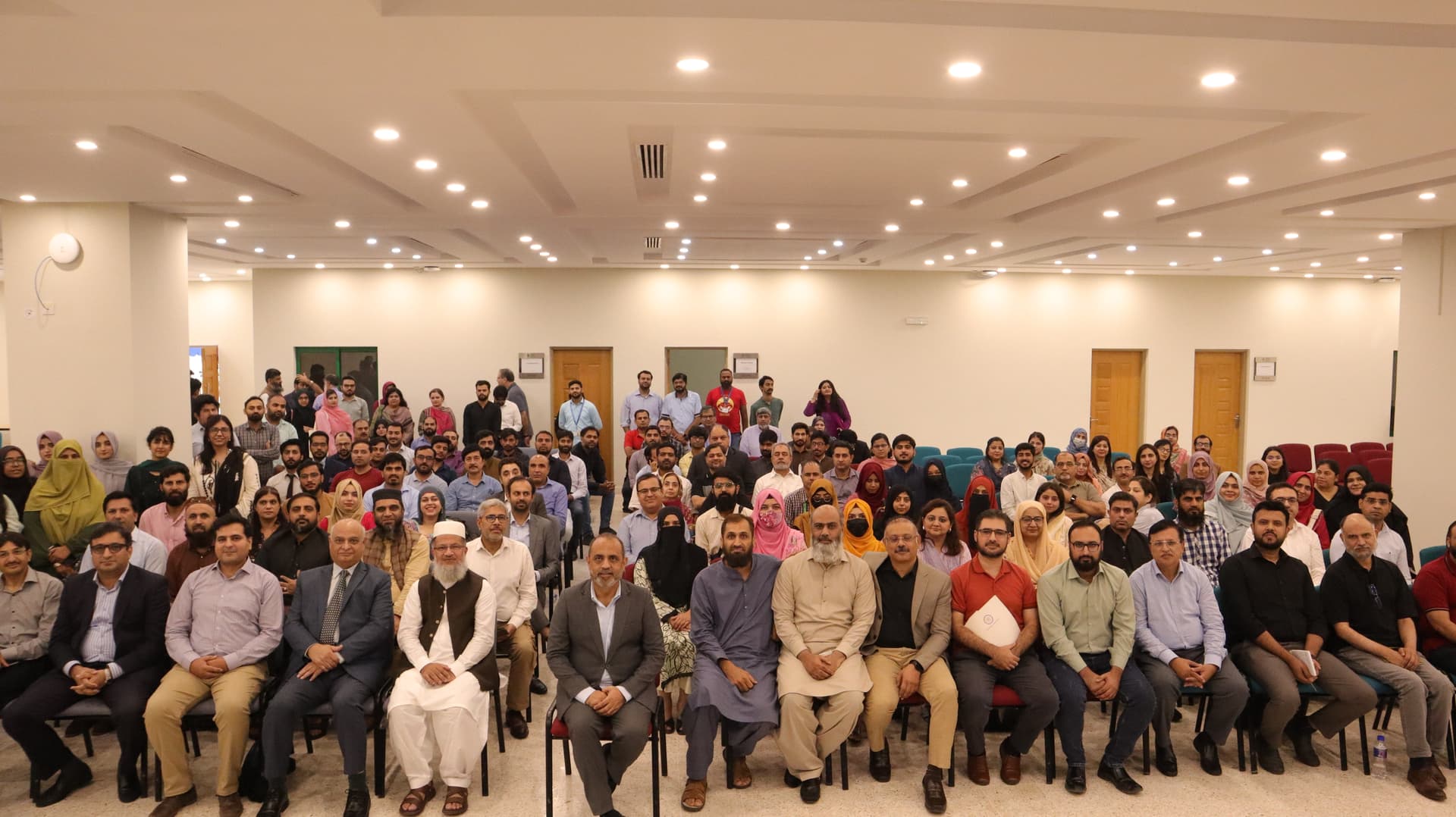
23 July, 2026
Venue: FC College,Lahore
Following successful sessions in Islamabad and Karachi, the National Computing Education Accreditation Council (NCEAC) held the third edition of its national Outcome-Based Education (OBE) workshop series at Forman Christian College (FC College), Lahore.
Despite heavy monsoon rainfall in the city that morning, which raised concerns about the session's continuation, the workshop proceeded as planned and was attended by approximately 200 faculty members from Lahore and surrounding areas.
Prof. Dr. Shoab A. Khan served as the resource person for the workshop, guiding participants through the principles and implementation of Outcome-Based Education. The session featured an engaging and interactive discussion, with faculty members raising thoughtful and probing questions on the transition from traditional teaching approaches to outcome-based education frameworks.
An industry perspective on the importance of OBE was presented by Mr. Badar Khushnood, continuing a tradition established during the Islamabad and Karachi sessions. Additionally, Ms. Hadia Faisal, Software Engineer at NCEAC's CARE team, demonstrated OBEledger, a software application developed to support faculty members in OBE implementation and documentation.
NCEAC extends its appreciation to Forman Christian College (FC College), Lahore, for its warm hospitality and excellent arrangements, and to all participating faculty members for their enthusiasm, commitment, and valuable engagement despite the challenging weather conditions.
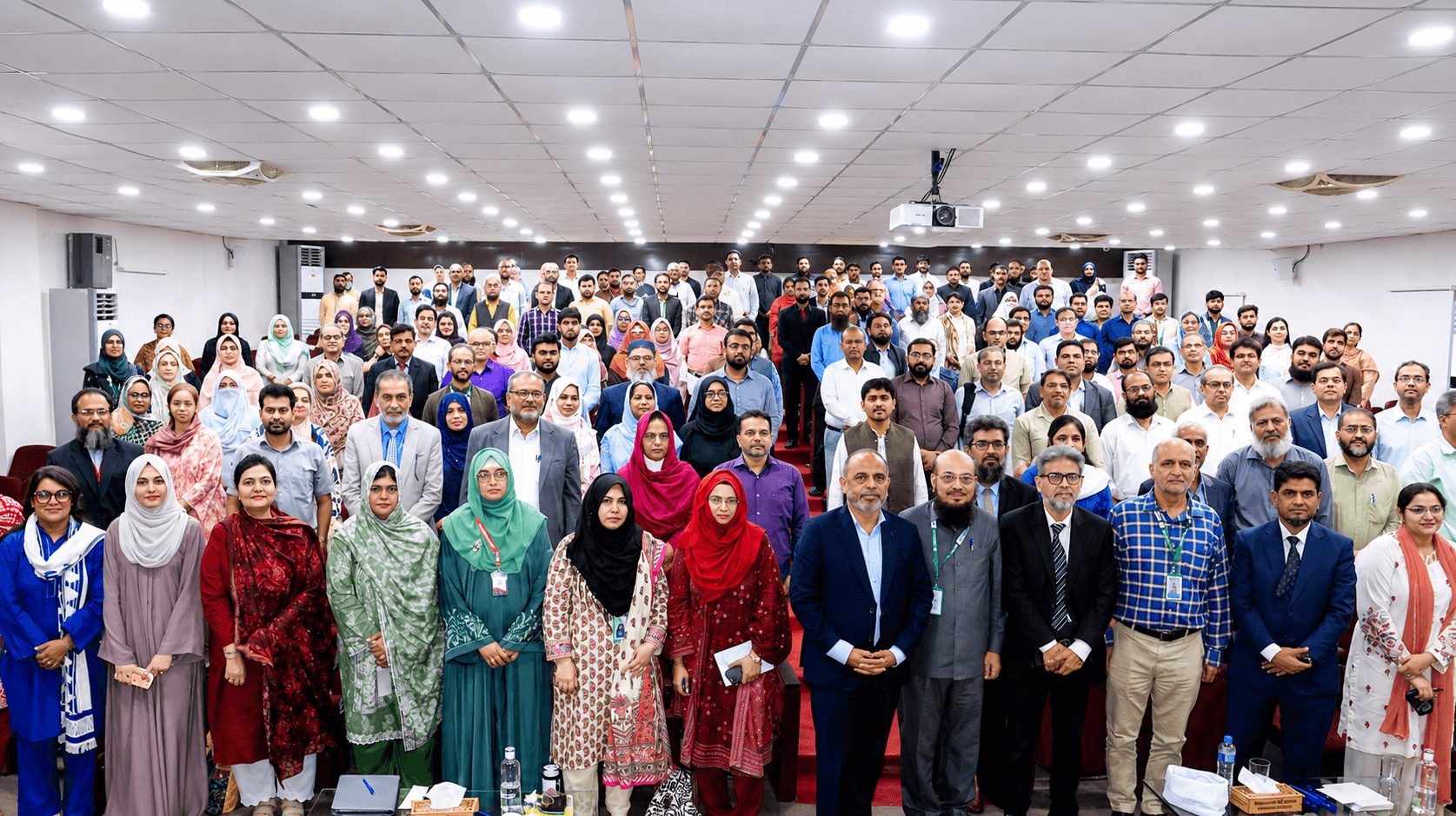
7 July, 2026
Venue: MAJU,KHARCHI
The National Computing Education Accreditation Council (NCEAC), Higher Education Commission (HEC), successfully conducted the "OBE in Its True Essence" training in Karachi, bringing together more than 250 faculty members from universities across Karachi and surrounding regions.
The session focused on the effective implementation of the revised Outcome-Based Education (OBE) framework, covering key aspects of curriculum alignment, assessment practices, and continuous quality improvement. The training provided an interactive platform for faculty members to exchange ideas, raise thoughtful questions, and discuss practical challenges related to OBE implementation.
An industry perspective was also incorporated into the session, highlighting the importance of aligning academic programs with evolving industry needs and preparing graduates with the competencies required in today's professional environment.
The high level of participation and constructive discussions reflected the strong commitment of faculty members toward enhancing the quality of computing education. The overwhelmingly positive feedback from participants further demonstrated their confidence in the revised OBE framework and its potential to strengthen teaching, learning, and graduate outcomes.
NCEAC-HEC remains committed to building institutional capacity and supporting higher education institutions across Pakistan in promoting quality assurance and the effective implementation of Outcome-Based Education.
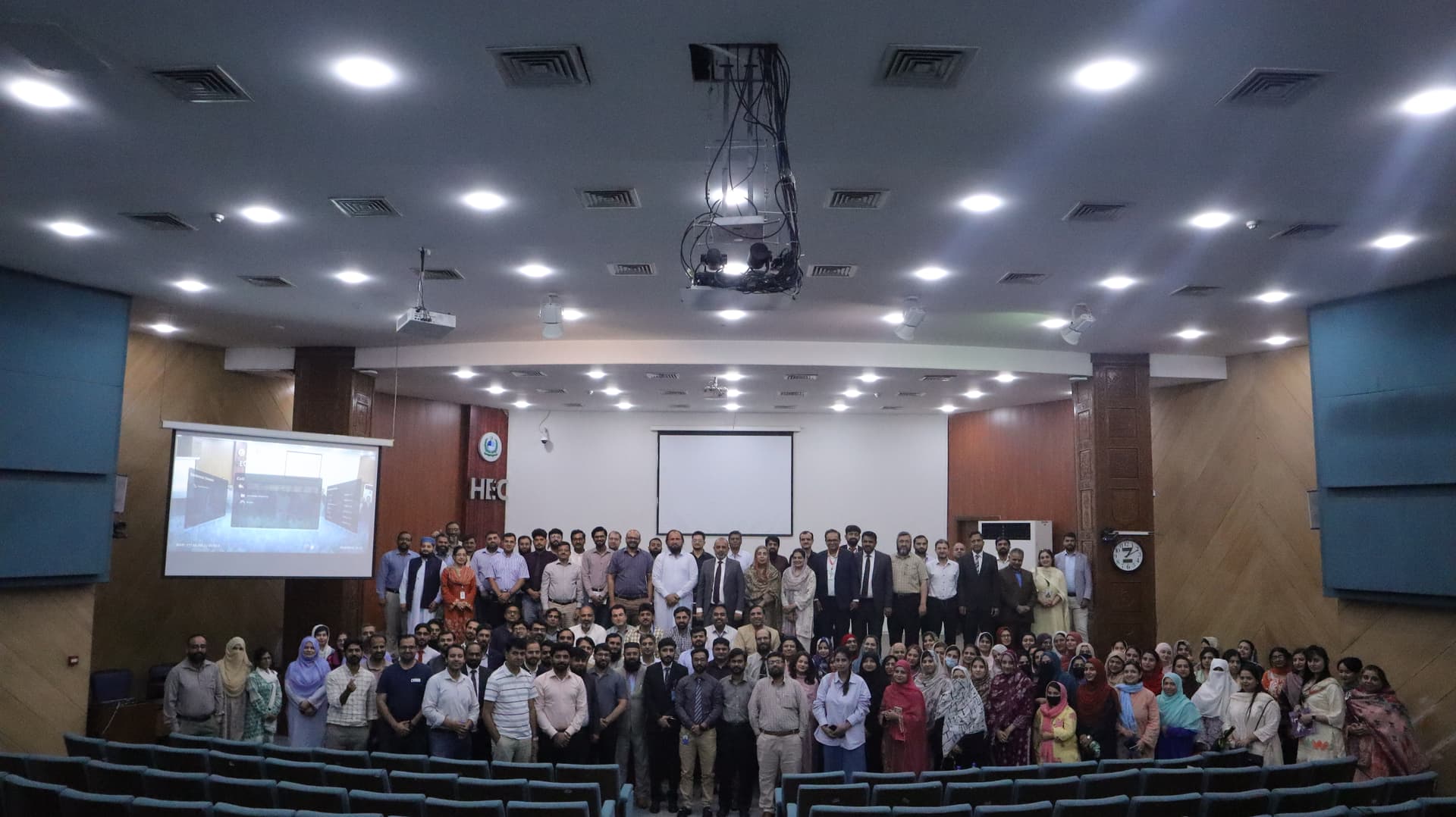
June 4, 2026
Venue: HEC Auditorium, Islamabad
The National Computing Education Accreditation Council (NCEAC), in collaboration with the Higher Education Commission (HEC), successfully conducted a one-day faculty training workshop on Outcome-Based Education (OBE) on June 4, 2026, at the HEC Auditorium, Islamabad.
The workshop attracted approximately 250 faculty members, program coordinators, focal persons, and academic leaders from Higher Education Institutions (HEIs) across Islamabad, Rawalpindi, and the Federal Area. Despite heavy rainfall and challenging weather conditions, participants attended in large numbers, demonstrating the commitment of the academic community towards strengthening quality assurance and accreditation practices in computing education.
The training was led by Prof. Dr. Shoab A. Khan, who provided an in-depth overview of contemporary OBE practices, Graduate Attributes (GAs), Program Learning Outcomes (PLOs), Course Learning Outcomes (CLOs), assessment design, and Continuous Quality Improvement (CQI). The session emphasized the need to move beyond compliance-driven documentation towards meaningful outcome measurement that supports student learning, innovation, and industry readiness.
The workshop also featured Syed Ahmed, Founder and CEO of DPL and former Chairman PASHA, as a guest speaker. He shared valuable insights from the industry perspective, highlighting key challenges faced by the technology sector, the skills gap in graduates, and the importance of preparing students for real-world problem-solving, innovation, and product development in a rapidly evolving digital economy.
The session included extensive discussions and interactive question-and-answer segments on the practical implementation of OBE within academic institutions, particularly in aligning curriculum with industry needs and improving graduate employability.
Participants were also introduced to emerging AI-assisted approaches for OBE implementation, assessment alignment, and continuous quality improvement, demonstrating how technology can support evidence-based academic decision-making and accreditation processes.
The event is part of NCEAC’s continued efforts to build institutional capacity, strengthen accreditation readiness, and promote excellence in computing education across Pakistan.
NCEAC acknowledges the support of the Higher Education Commission (HEC) for facilitating the event and appreciates the active participation of faculty members and academic leaders from HEIs across the region.
ULEF US/PK – Pak Angels Generative AI Training Program Conducted in 2025-2026
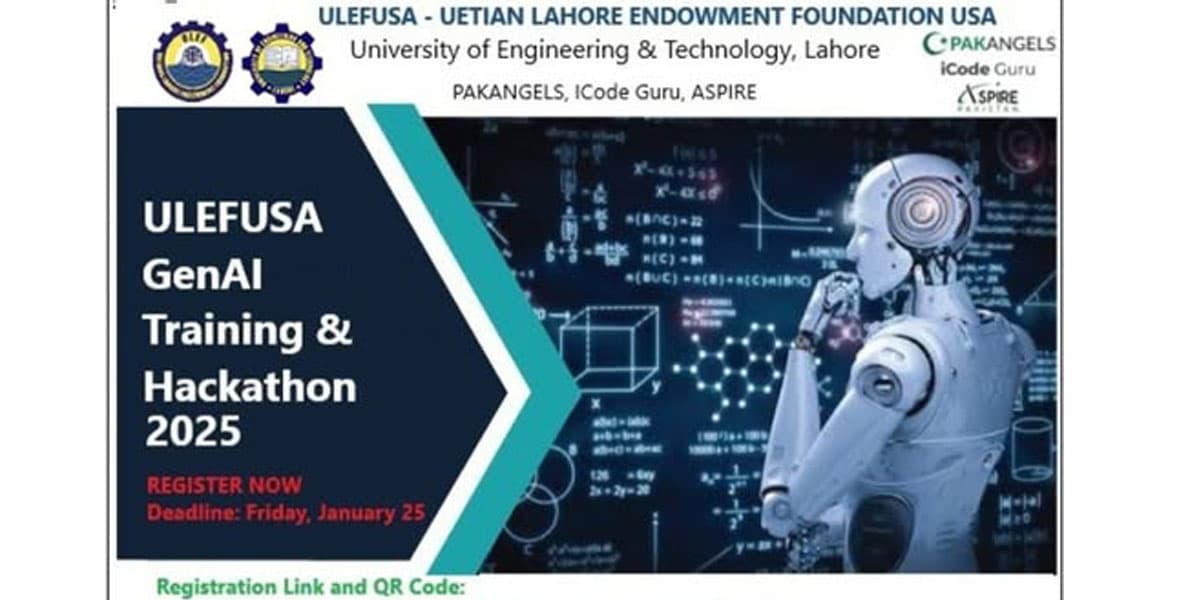
The Pak Angels Generative AI Training Program, conducted in collaboration with NCEAC, has been successfully completed, bringing together a large community of learners from across Pakistan.
The program recorded an exceptional response with over 21,000 registrations, including students, faculty members, researchers, and professionals from undergraduate, graduate, and institutional levels. Participants represented a wide range of universities, affiliated colleges, institutes, and campuses across both public and private sector institutions nationwide.
This large-scale initiative aimed to enhance awareness, digital readiness, and future-oriented competencies in the field of Generative Artificial Intelligence and emerging technologies. The training sessions provided valuable insights into AI applications, innovation trends, and the growing importance of AI-driven skills in education, research, and industry.
The program also included structured cohort-based learning, with:
- 1st Cohort: Commenced on Sunday, October 19th, 2025
- 2nd Cohort: Conducted in January 2026
This initiative, under ULEF US/PK in collaboration with NCEAC, reflects a shared commitment to strengthening quality computing education, innovation, and digital capacity building across Pakistan.
Program Evaluator Regional Trainings Conducted in 2025–2026
February 2026
NCEAC 8th Program Evaluators (PE) Regional Training Workshop, Lahore
Venue: Qarshi University, Lahore
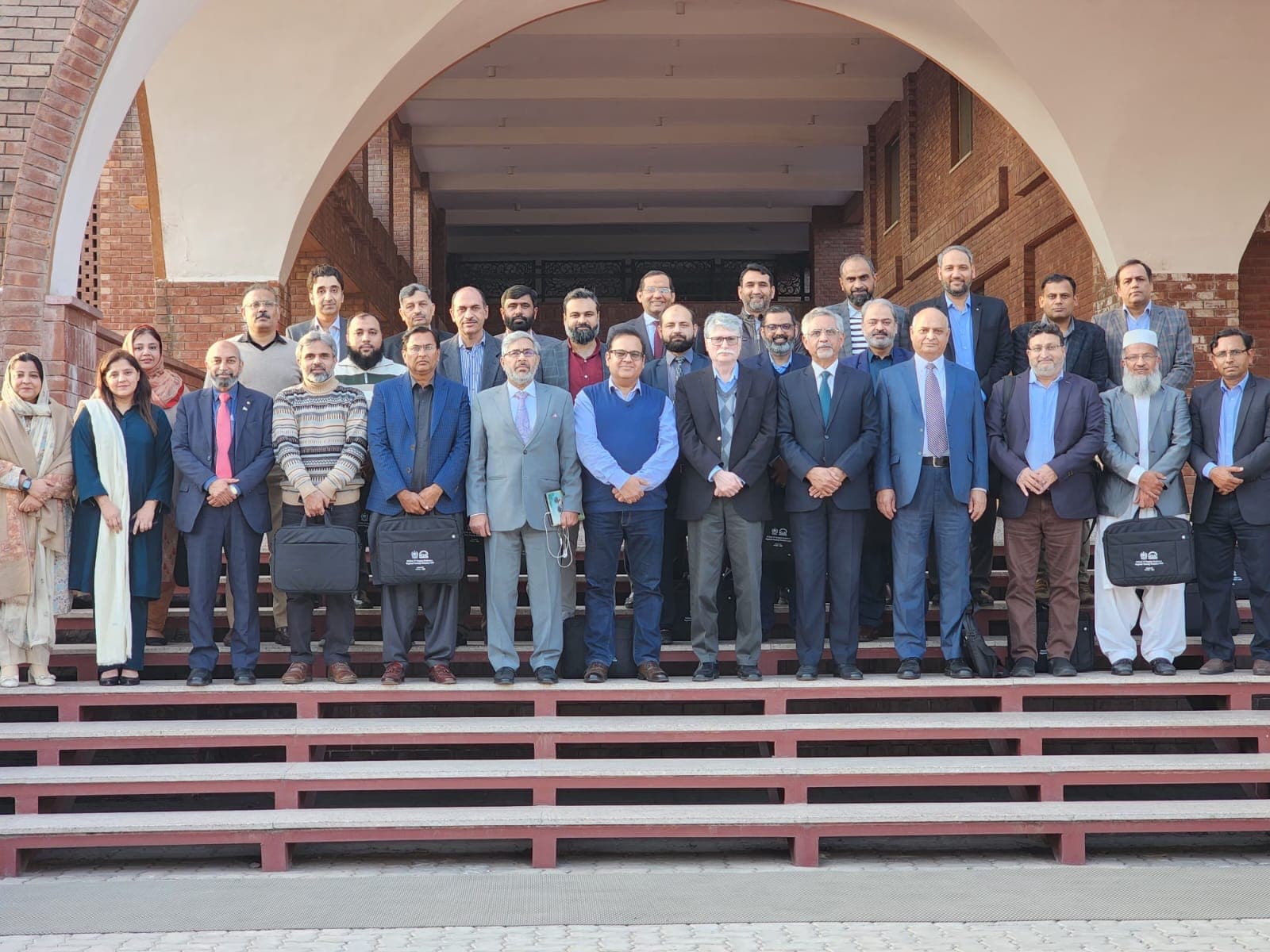
The 8th NCEAC Program Evaluators (PE) Regional Training Workshopwas successfully conducted at Qarshi University, Lahore on February 11, 2026, with the objective of strengthening evaluators’ understanding and ensuring uniform implementation of accreditation standards across institutions.
The workshop was chaired by Prof. Dr. Shafay Shamail, Chairman NCEAC, and presented by Prof. Dr. Muhammad Ali Maud, Professor, University of Engineering and Technology (UET), Lahore.
The Resource Person delivered a comprehensive and insightful presentation covering the NCEAC accreditation framework, Outcome-Based Education (OBE) principles, evaluation methodologies, SAR review mechanisms, and the practical application of accreditation criteria. Particular emphasis was placed on the interpretation of performance indicators, assessment rubrics, and evidence-based evaluationto ensure transparency and consistency in accreditation decisions.
The workshop provided hands-on learning opportunitiesthrough scenario-based discussions and practical case analyses, enabling evaluators to apply accreditation criteria in real-world contexts.
Overall, the Lahore workshop concluded on a highly positive note, reaffirming the collective commitment of evaluators and institutions toward continuous quality improvement, transparent accreditation practices, and the development of competent, industry-ready computing graduates in accordance with national and international standards.
January 2026
NCEAC 8th Program Evaluators (PE) Regional Training Workshop, Islamabad
Venue: Margala Hotel, Islamabad
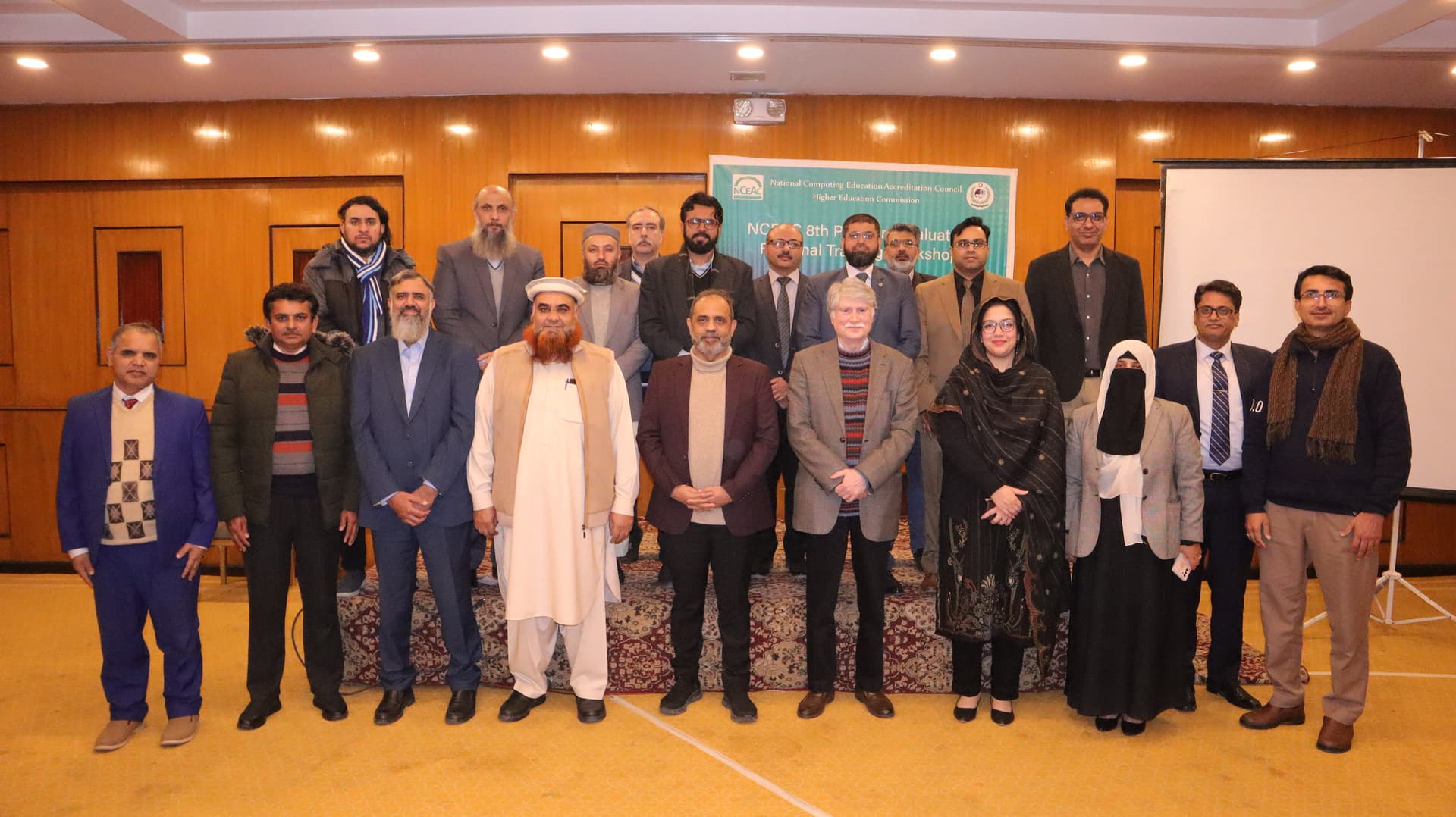
The NCEAC 8th Program Evaluators (PE) Regional Training Workshop was successfully conducted in Islamabad on January 7, 2026, bringing together Program Evaluators from universities across the region. The full-day workshop aimed to strengthen evaluators’ understanding of NCEAC and ABET accreditation frameworks, with a particular focus on Outcome-Based Education (OBE) and the practical application of accreditation criteria through real-world scenarios.
The workshop was chaired by Prof. Dr. Shafay Shamail, Chairman NCEAC, with Prof. Dr. Shoab A. Khan, Chancellor, Sir Syed CASE Institute of IT, Islamabad, serving as the Resource Person. The resource person delivered an insightful presentation covering accreditation standards, evaluation methodologies, assessment rubrics, and best practices for aligning NCEAC criteria with ABET requirements.
An engaging and thoughtful discussion emerged around the quality of graduates produced by higher education institutions, highlighting the shared responsibility of both individuals and institutions in developing competent and industry-ready professionals. While personal motivation was recognized as an important factor, participants collectively emphasized the critical role of universities in fostering academic environments that promote learning, innovation, and excellence.
Over nearly eight hours of interactive sessions, participants engaged in in-depth discussions on evaluation rubrics, accreditation processes, and proposed enhancements to further harmonize NCEAC standards with ABET benchmarks. Hands-on case-study-based exercises enabled evaluators to assess sample programs, providing valuable real-time experience.
The workshop concluded with a strong consensus on the need for greater institutional commitment and purposeful academic collaboration to strengthen quality assurance mechanisms and prepare future-ready IT graduates in line with national and international standards.
December 2025
NCEAC 8th Program Evaluators Regional Training Workshop, Karachi
Venue:Ramada Plaza, Karachi
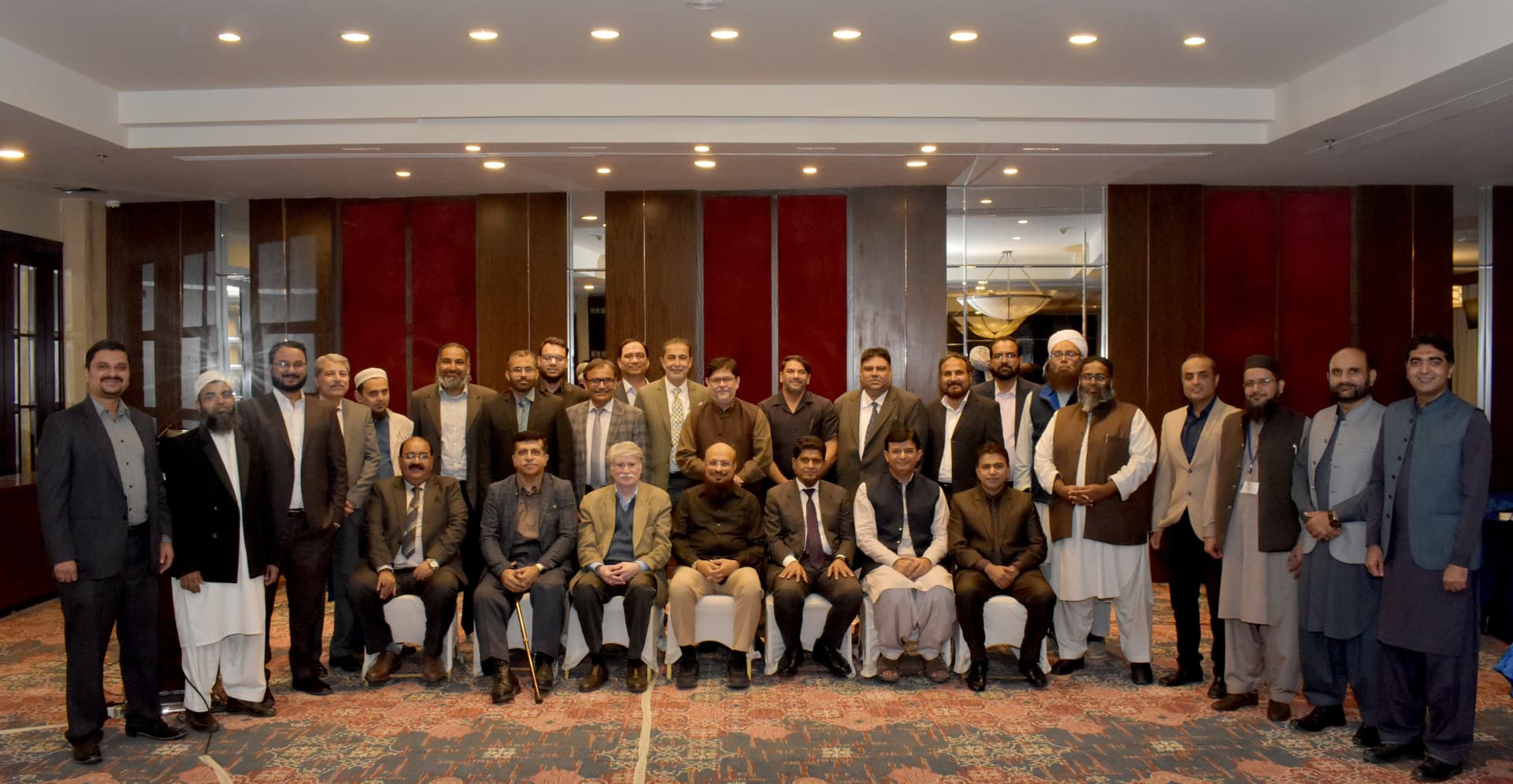
The 8th NCEAC Program Evaluators Regional Training Workshop was successfully held in Karachi on December 19, 2025, aimed at enhancing the understanding and ensuring the consistent implementation of accreditation policies among program evaluators. The workshop was chaired by Prof. Dr. Shafay Shamail, Chairman NCEAC, with Prof. Dr. Zubair A. Shaikh, President, Muhammad Ali Jinnah University, serving as the Resource Person.
The resource person delivered a comprehensive presentation covering an overview of the NCEAC accreditation framework, revised manual, standards and procedures, the HEC–NCEAC approved Computing Curriculum 2025, accreditation criteria, SAR preparation guidelines, and the practical aspects of program evaluation, including reporting mechanisms and marking schemes.
During interactive discussions, participants raised several critical issues, including ambiguity in eligibility criteria, particularly regarding the transition from Associate Degree Programs to BS Computer Science. Concerns were also highlighted about the rapid increase in specializations, their alignment with degree titles, and the need to clearly define acceptable specializations and elective limits.
Further discussions focused on certification programs integrated within degree programs, evaluation of internships, and the assessment ofcapstone or final-year projects. Participants emphasized the need for explicit guidelines andstandardized rubrics, particularly forcomplex problem-solving and design-oriented outcomes.
Clarifications were also sought regarding faculty eligibility, especially for faculty transitioning from engineering or non-computing backgrounds. It was emphasized that core computing courses must be taught by core computing faculty, supported by structured faculty development programs. Additionally, it was reiterated that morning and evening programsare to be treated as full-time programs, requiring equivalent facilities and academic support.
Overall, participants stressed the importance of clear, written NCEAC guidelines to ensure uniform interpretation and consistent implementation of accreditation policies across institutions. The workshop concluded with a shared commitment to strengthening quality assurance and accreditation practices in computing education nationwide.
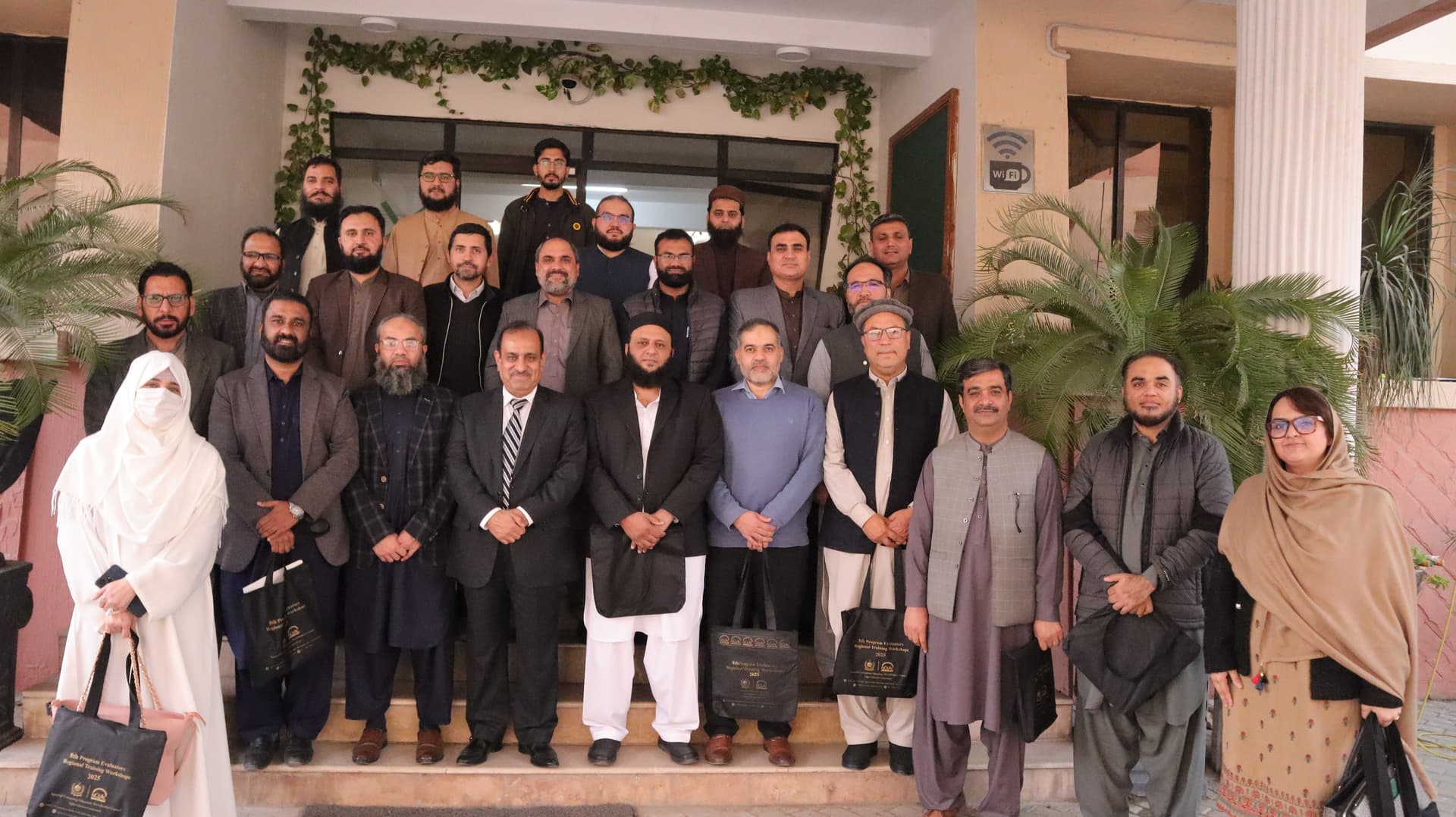
November 2025
NCEAC 8th Program Evaluators Regional Training Workshop, Peshawar
Venue:HEC regional center, Peshawar
The 8th NCEAC Program Evaluators Regional Training Workshop was successfully held in Peshawar with the objective of enhancing evaluators’ understanding and ensuring the consistent implementation of accreditation policies across institutions.
The workshop was chaired and presented by Prof.Dr. Jamil Ahmad. Vice Chancellor Abdul Wali Khan University, Mardan.
The Resource Person delivered an insightful presentation covering accreditation standards and best practices for aligning NCEAC criteria with Seoul Accord requirements.
A thoughtful discussion emerged around the quality of graduates produced by higher education institutions, emphasizing the shared responsibility of both individuals and institutions in developing competent and industry-ready professionals. While personal motivation was acknowledged as important, participants strongly highlighted the critical role of universities in fostering academic excellence.
Overall, the workshop concluded on a highly positive note, reinforcing the importance of transparent evaluation practices, outcome-based education, and continuous quality enhancement. Participants appreciated the interactive sessions and practical insights shared, which strengthened their capacity to effectively implement NCEAC accreditation standards. The workshop successfully fostered a collaborative learning environment and reaffirmed the collective commitment of evaluators and institutions toward maintaining and improving the quality of higher education in the region
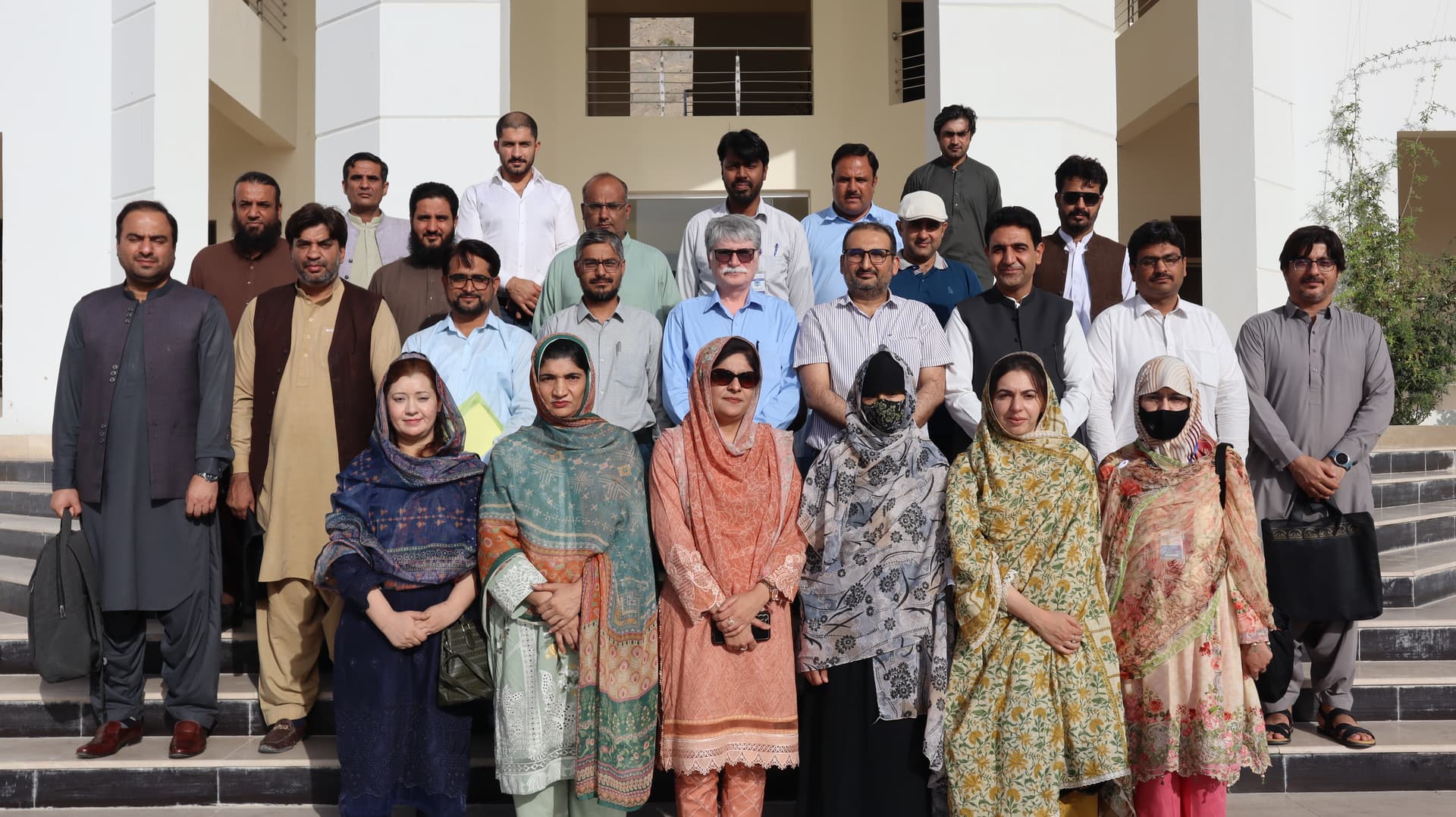
August 2025
NCEAC 8th Program Evaluators Regional Training Workshop, Quetta
Venue:BUITEMS Quetta
Venue: BUITEMS Quetta
A total of 35 faculty members from universities in Quetta and 10 participants from the industry based in Quetta took part in the workshop. Faculty members shared their experiences in teaching programming courses, while industry representatives provided insights into local industry needs and future directions. The discussion focused on the following key points:
- Developed algorithmic thinking to students.
- Role of AI in programming education is important.
- Labs should be upgraded for students for effective learning.
- Effective use of programming environments in universities.
- Provide real-world problem-solving experiences through internships and industry partnerships.
- Align curricula with industry needs.
- Start with beginner-friendly languages like Java scripting, Next Js, Python.
- Integrate AI tools like GitHub Copilot.
- Teach essential tools like GitHub, Jira, and Docker.
- Foster collaboration through pair programming and group projects.
- Offer mentorship programs to bridge the gap between students and industry professionals.
Phase 1: Meta AI Training Conducted in 2025
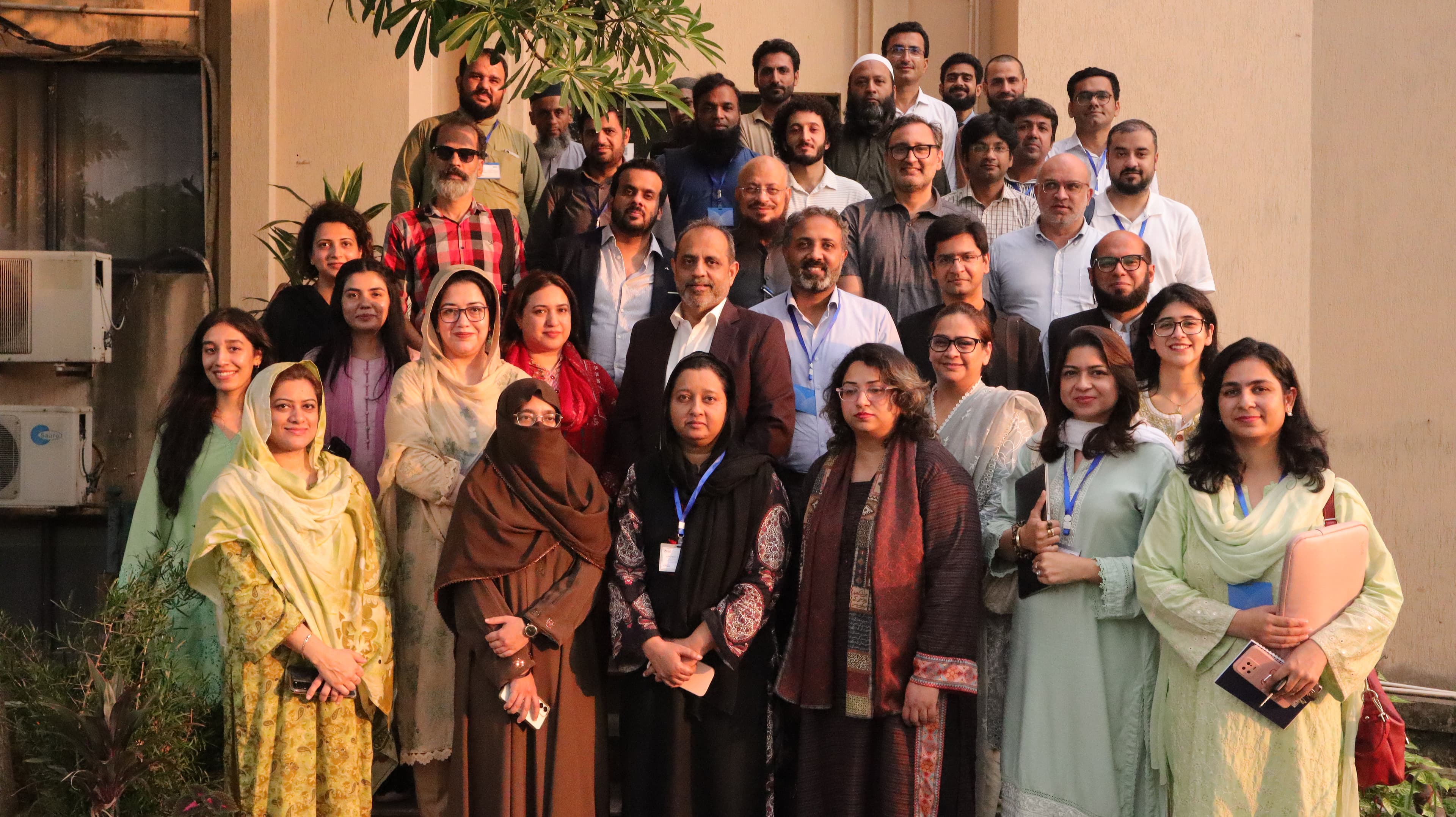
11-12, Sep 2025
Venue: HEC regional center, Islamabad
We are pleased to share that the Meta Master Trainer Program, delivered by Meta representative Atomcamp and led by Dr. Naveed Iftikhar & Dr. Shoab A. Khan, was successfully completed on 11–12 September 2025 at Smart Classroom, HEC H-8/1, Islamabad. This achievement was made possible through the collaboration of NCEAC, aligning the program with national computing education priorities and strengthening faculty development. As a result, 30 Master Trainers from across Pakistan have been prepared to conduct nationwide workshops, introducing Generative AI into classrooms and expanding its impact across campuses.
This program is not just training—it is the beginning of a movement to shape the future of teaching and learning in Pakistan.
We extend our sincere gratitude to Meta, the Ministry of IT & Telecommunication, Pakistan Software Export Board (PSEB), Higher Education Commission (HEC), NCEAC, and atomcamp for making this vision a reality.
Phase 2: Meta Non-Technical Faculty Program Conducted in 2025
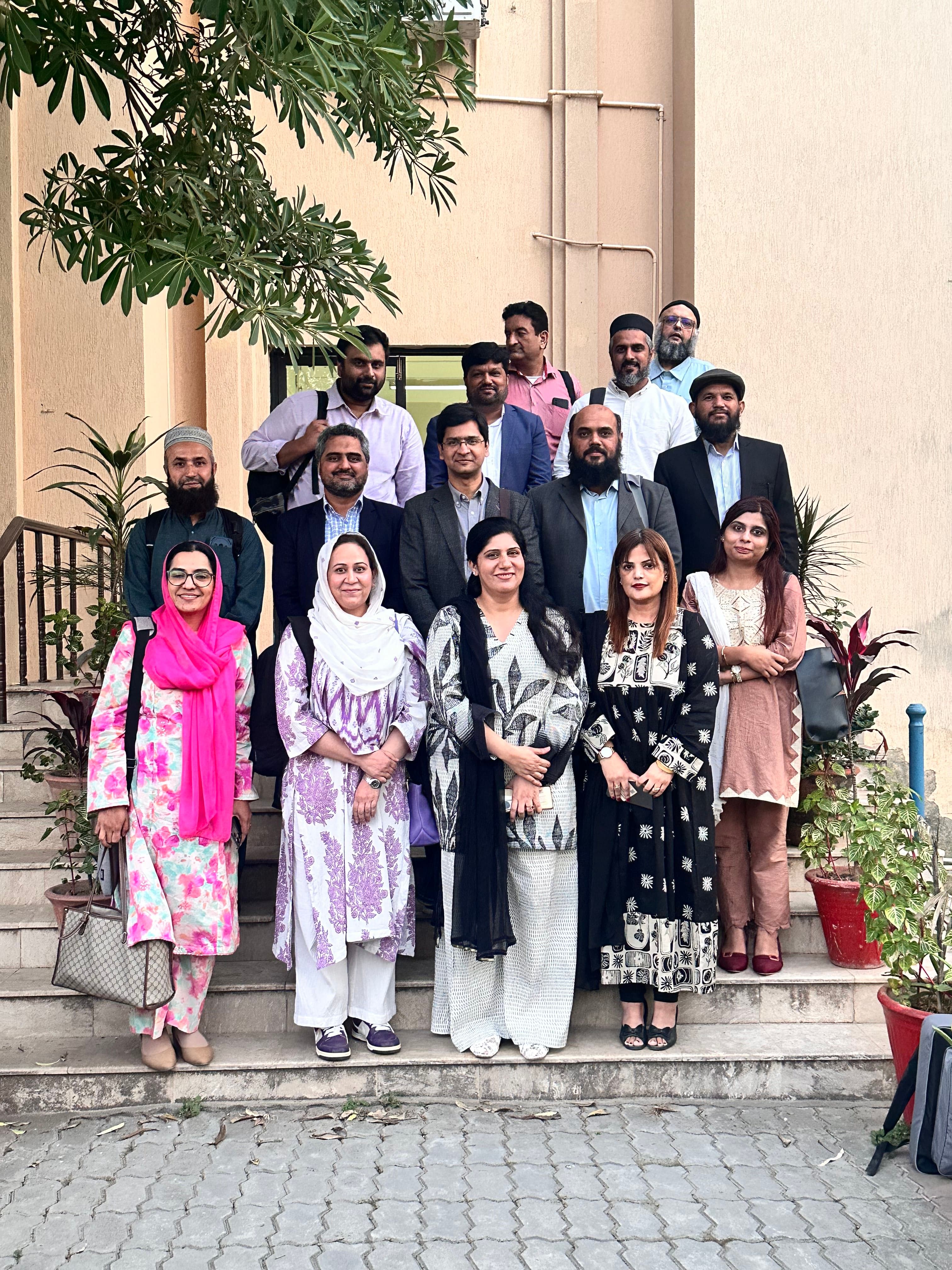
11-12, Sep 2025
AI-Ready Faculty Pilot Program (In Collaboration with NCEAC & Atomcamp)
The META Phase 2 Non-Technical Faculty Program,implemented in collaboration with the National Computing Education Accreditation Council (NCEAC) and Atomcamp, is a nationwide faculty capacity-building initiative aimed at empowering non-technical university faculty to responsibly integrate Artificial Intelligence into teaching, research, and academic management. The program focuses on AI fundamentals, prompt engineering, responsible and ethical AI use, educational applications, and no-code automation tools, tailored specifically for Pakistan’s higher education context.
Phase 1: Master Trainer Preparation
Prior to nationwide rollout, Phase 1 of the AI-Ready Faculty Pilot Program was conducted as a 2-day intensive training session in Islamabad on September 11–12, 2025. This phase was designed for Computer Science faculty, with the objective of preparing a national pool of Master Trainers. A total of 30 Master Trainers from across Pakistan were trained during Phase 1 and are now leading the delivery of Phase 2 workshops nationwide.
Phase 2: Program Implementation & Schedule
Phase 2 was implemented through 14 region-wise, 4-day workshops conducted from November to December 2025, ensuring broad geographic outreach and equitable participation across Pakistan. Each workshop was delivered by certified Master Trainers and hosted 25 participants.
Region-Wise Training Schedule:
- Islamabad
- November 3–6, 2025
- November 10–13, 2025
- Peshawar
- November 10–13, 2025
- Karachi
- November 17–20, 2025
- November 24–27, 2025
- December 1–4, 2025
- December 8–11, 2025
- December 15–18, 2025
- Quetta
- November 17–20, 2025
- Gilgit-Baltistan (GB)
- November 24–27, 2025
- Azad Jammu & Kashmir (AJK)
- December 1–4, 2025
- Lahore
- December 1–4, 2025
- December 8–11, 2025
- December 15–18, 2025
Participation & National Coverage
A total of 350 non-technical faculty members from universities and degree-awarding institutions across Pakistan participated in Phase 2 of the program. The region-wise delivery model ensured inclusive national coverage , strengthened institutional readiness for AI adoption, and fostered a community of AI-ready educators across all provinces and regions.
Role of NCEAC & Atomcamp
- NCEAC played a central role in coordination, outreach, and institutional engagement, ensuring alignment with national higher education quality assurance and faculty development objectives.
- Atomcamp, as the implementation and training partner, contributed expert facilitators, hands-on learning design, and industry-aligned AI content delivery.
Through this collaborative initiative, META, NCEAC, and Atomcamp have collectively advanced responsible AI adoption, enhanced teaching and learning practices, and supported the digital transformation of Pakistan’s higher education sector.
Industry and Academia Rendezvous Conducted in 2024-2025
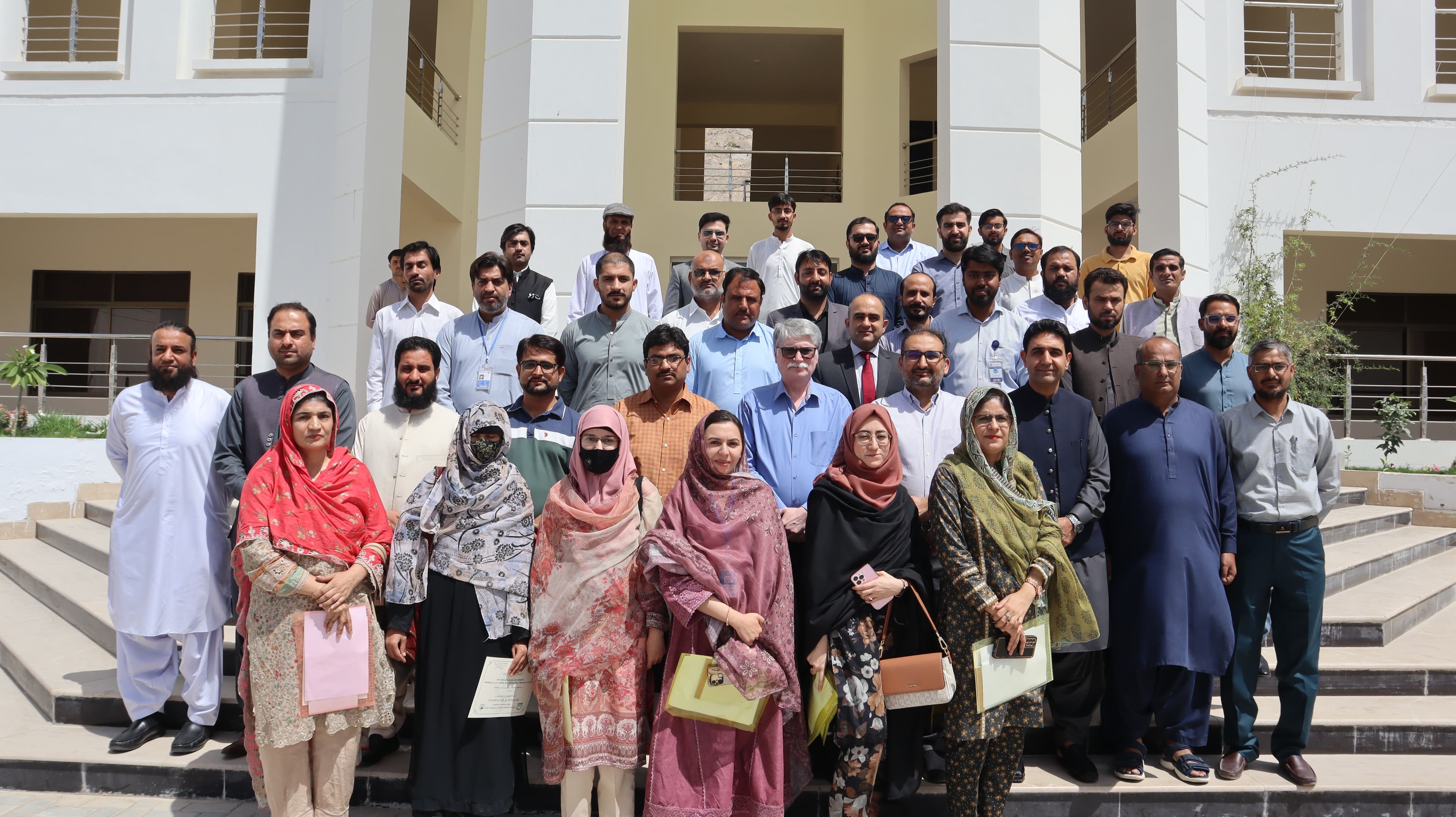
April 2025
Venue: Mountain View Tech Park, Quetta
A total of 35 faculty members from universities in Quetta and 10 participants from the industry based in Quetta took part in the workshop. Faculty members shared their experiences in teaching programming courses, while industry representatives provided insights into local industry needs and future directions. The discussion focused on the following key points:
- Developed algorithmic thinking to students.
- Role of AI in programming education is important
- Labs should be upgraded for students for effective learning
- Effective use of programming environments in universities.
- Provide real-world problem-solving experiences through internships and industry partnerships.
- Align curricula with industry needs.
- Start with beginner-friendly languages like Java scripting, Next Js, Python.
- Integrate AI tools like GitHub Copilot.
- Teach essential tools like GitHub, Jira, and Docker.
- Foster collaboration through pair programming and group projects
- Offer mentorship programs to bridge the gap between students and industry professionals.

April 2025
Venue: HEC regional center, Peshawar
A total of 16 faculty members from universities in Peshawar and 4 participants from the industry based in Peshawar took part in the workshop. Faculty members shared their experiences in teaching programming courses, while industry representatives provided insights into local industry needs and future directions. The discussion focused on the following key points:
Pedagogy of teaching programming courses
- Use of tools and technologies to enhance user experience.
- Use of tools and technologies to improve the skills of the students as well as faculty.
- Inviting people from industry to share their experiences.
- Engage industry for class as well as senior projects.
Curriculum Framework and Reform
- Align curriculum with industrial demands and international standards.
- Industry input to guide curriculum updates.
- Considering integration of certifications (e.g., Coursera) into electives.
- Faculty training in understanding and implementation of curriculum.
Technology & Infrastructure Gaps
- Address digital divide and poor Internet/connectivity in remote areas.
- Propose at least one high-tech computing lab per university by 2025.
- Use government-backed projects (e.g., HEDP) for lab setup.
- Free or subsidized access to essential software (MATLAB, ERP, etc.).
- Promote shared access models and cloud-based resources.
Innovation and Product-Oriented Research
- Push for incubator culture in computing institutions.
- At least one incubator per institution within 2-3 years.
- Encourage universities to develop local IT products to reduce dependency on expensive foreign subscriptions (e.g., ICI example).
Quality & Accreditation Standards
- Strengthen accreditation through self-assessment, cluster models, and simplified processes.
- Promote OBE (Outcome-Based Education).
- Address challenges with unqualified colleges offering CS programs-such as faculty qualifications (e.g., PhD requirement).
Industry-Academia Linkages
- Emphasize local industry collaboration for real-world relevance and involve experienced people from industry as visiting industry teachers and professors of practice.
- Encourage mentorship and curriculum alignment with industry demands.
- Engage with industry to provide internships to students.
- Seek options for faculty placement in industry for their upskilling.
Policy & Implementation Challenges
- Funding remains a core issue; PC-1 process is slow.
- Training programs should be developed for faculty members to equip them with the latest pedagogical as well as technical skills.

Jan 2025
Venue: HEC, LI Hall, Islamabad
A total of 14 faculty members from universities in Islamabad and 4 participants from the industry based in Islamabad took part in the workshop. Faculty members shared their experiences in teaching programming courses, while industry representatives provided insights into local industry needs and future directions. The discussion focused on the following key points:
- Best pedagogical approaches for teaching programming should be adopted in institutions.
- Develop algorithmic thinking in students.
- Role of AI in programming education is important.
- Labs should be upgraded for students for effective learning.
- Effective use of programming environments in universities.
- The Higher Education Commission (HEC) should establish a policy regarding salary packages for industry professionals who teach at universities.
- Training programs should be developed for faculty members to equip them with the skills to train teachers in programming and AI.
- Provide real-world problem-solving experiences through internships and industry partnerships.

July 2024
Venue: Qarshi University, Lahore
A total of 30 faculty members from universities in Lahore and 15 participants from the industry based in Lahore took part in the workshop. Faculty members shared their experiences in teaching programming courses, while industry representatives provided insights into local industry needs and future directions. The discussion focused on the following key points:
- Introduce Python or JavaScript as the first programming language to emphasize problem-solving over syntax.
- Encourage the use of generative AI tools like ChatGPT for code generation and debugging, with human oversight for refinement.
- Integrate GitHub, Slack, and Scrum into classroom projects to expose students to industry tools and collaboration practices.
- Align curriculum with real-world applications, including case studies and industry-relevant frameworks.
- Incorporate coding challenges from HackerRank, CodeChef, LeetCode, and CodeForces into the curriculum to focus on problem-solving skills.
- Utilize platforms like Moss for plagiarism checking to ensure originality and maintain academic integrity.
- Use Raptor or similar tools to help students visualize and understand code logic early in the course.
- Introduce debuggers as early as possible in the curriculum to teach students effective troubleshooting techniques.
- Pair inexperienced teachers with industry professionals for mentorship and curriculum design support.
- Organize coding competitions and workshops to reinforce the focus on problem-solving as emphasized by Dr. Aksam.
- Ensure teachers are actively involved in lab work to improve practical teaching quality.

June 2024
Venue: MAJU, Karachi
A total of 14 faculty members from universities in Karachi and 6 participants from the industry based in Karachi took part in the workshop. Faculty members shared their experiences in teaching programming courses, while industry representatives provided insights into local industry needs and future directions. The discussion focused on the following key points:
- Align curricula with industry needs.
- Use active learning and project-based tasks.
- Prioritize algorithmic thinking with coding challenges.
- Start with beginner-friendly languages like JavaScript and Python.
- Integrate AI tools like GitHub Copilot into teaching and learning workflows.
- Teach essential tools like GitHub, Jira, and Docker to prepare students for real-world projects.
- Foster collaboration through pair programming and group projects.
- Encourage continuous learning through coding competitions and hackathons.
- Offer mentorship programs to bridge the gap between students and industry professionals.
OBE-Based Trainings Conducted in 2019

23 April 2019
Venue: HEC regional center, Peshawar
A total of 15 faculty members from universities in Peshawar took part in the workshop. Faculty members shared their experiences in teaching programming courses. The discussion focused on the following key point:
International Accreditation for Computing Programs
- Seoul Accord.
- Membership & Monitoring Procedures.
- Seoul Accord Graduate Attributes & guiding principles.
- Outcomes Based Education
- Continuous Quality Improvement in OBE
- Three Domains in Bloom's Taxonomy
- Designing Course Learning Outcomes (CLOs)
- Mapping of Course Learning Outcomes on Program Learning Objectives
- Transition from Current NCEAC Accreditation to Outcome Based Accreditation

8 April 2019
Venue: HEC regional center, Karachi
A total of 18 faculty members from universities in Karachi took part in the workshop. Faculty members shared their experiences in teaching programming courses. The discussion focused on the following key point:
- International Accreditation for Computing Programs
- Seoul Accord.
- Membership & Monitoring Procedures.
- Seoul Accord Graduate Attributes & guiding principles.
- Outcomes Based Education
- Continuous Quality Improvement in OBE
- Three Domains in Bloom's Taxonomy
- Designing Course Learning Outcomes (CLOs)
- Mapping of Course Learning Outcomes on Program Learning Objectives
- Transition from Current NCEAC Accreditation to Outcome Based Accreditation

30 March 2019
Venue: HEC regional center, Lahore
A total of 17 faculty members from universities in Lahore took part in the workshop. Faculty members shared their experiences in teaching programming courses. The discussion focused on the following key point:
- International Accreditation for Computing Programs
- Seoul Accord.
- Membership & Monitoring Procedures.
- Seoul Accord Graduate Attributes & guiding principles.
- Outcomes Based Education
- Continuous Quality Improvement in OBE
- Three Domains in Bloom's Taxonomy
- Designing Course Learning Outcomes (CLOs)
- Mapping of Course Learning Outcomes on Program Learning Objectives
- Transition from Current NCEAC Accreditation to Outcome Based Accreditation

25 March 2019
Venue: HEC, LI Hall, Islamabad
A total of 18 faculty members from universities in Islamabad took part in the workshop. Faculty members shared their experiences in teaching programming courses. The discussion focused on the following key point:
- International Accreditation for Computing Programs
- Seoul Accord.
- Membership & Monitoring Procedures.
- Seoul Accord Graduate Attributes & guiding principles.
- Outcomes Based Education
- Continuous Quality Improvement in OBE
- Three Domains in Bloom's Taxonomy
- Designing Course Learning Outcomes (CLOs)
- Mapping of Course Learning Outcomes on Program Learning Objectives
- Transition from Current NCEAC Accreditation to Outcome Based Accreditation